What a Tasmanian real estate business learned building its own AI team. The session Brad Reeves presented with The Entourage at Wrest Point. Enter your details to view it.
Presented by Brad Reeves. By providing your details you agree to receive further material from Brad Reeves and Brooklyn Bradley.
What a Tasmanian real estate business learned building its own AI team.
The value is in the processes you hand over, not the questions you ask.
Sixteen years leading engineering, safety and IT at Tasmanian Alkaloids. Full time in my own businesses since 2023. I am not a software person.
Most businesses have tried ChatGPT. Very few have put AI to work.
We manage three self storage facilities. Penny answers every enquiry, quotes the right unit, books the customer and chases the arrears. The team never hears the phone ring.
Every call answered. Size, price, access, the same way every time.
Arrears chased, the waitlist called back when a unit frees up.
Complaints and anything she is unsure about go to a person, with the transcript.
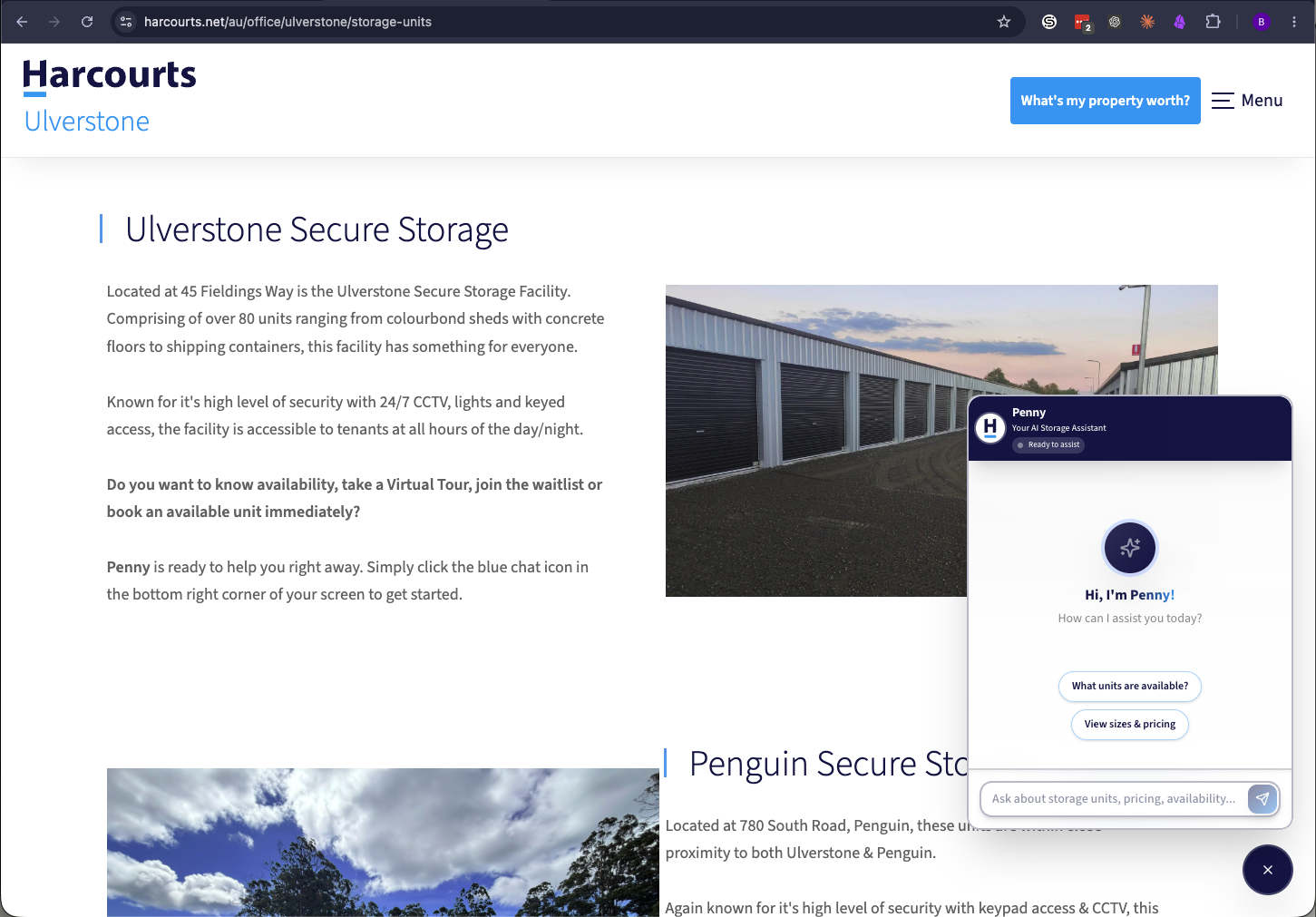
Before anything was built, Penny had a job description. You will write one for your business in part five.
| Job title | Storage enquiries and bookings agent |
|---|---|
| The job, in one sentence | Answer every storage enquiry, quote the right unit and book the customer in. |
| Inputs: what she needs to know | Unit sizes, availability, prices, facility rules, access hours. |
| Tools: what she can touch | The phone line, website chat, the booking system. |
| Hand-off: when a human steps in | Complaints, unusual requests, anything she is not sure about. |
| Manager: who checks her work | The storage manager reviews bookings and conversations. |
| Measure: how we know it is working | Enquiries answered, bookings made, after-hours coverage. |
Four rungs. Most owners are on the first. The return is on the third and fourth.
The value sits in the processes you hand over, not the questions you ask. Everything we have built lives on rungs three and four.
Three principles behind everything we build.
The hype says AI will replace us. Maybe it will. I would rather treat it as a threat and get ahead of it than bet the business that it won't. So I keep it practical.
Efficiency and revenue. Cut waste, time and cost on one side, add revenue on the other. Both feed profit.
A better customer experience. Automate the work that never touches a customer. Give people the time for the work that does.
Everything you are about to see was built with Claude Code. I brief it in plain English, the way I would brief a person. It writes the code.
Every weekday at 8:30, open the accounting software, match the bank transactions against these rules, code them, and tell me anything you are not sure about.That is the whole instruction. No syntax, no training course.
If you can explain a process to a new hire, you can build it. The hard part was never the code. It is knowing your business well enough to describe it.
That is deliberate. Instead, we build the tool, and they use it inside the workflow they already have.
Everything we build sits inside a separate business. If it is valuable to us it is valuable to someone else, so anything of real substance gets commercialised.
But you do have to be the driving force. One genuine expert is enough. Your edge is knowing how the business runs, and it only happens if you push it through.
Your CRM, your accounting software, your job system all stay. We close the gaps between them and drop AI in where a person used to be.
Your desk, the books, customer paperwork, the database. Each one used to be a person's job.
Hand over your own admin first. Ask of every task: how can AI do this for me?
Calendar, priorities and overnight email, summarised before I am at my desk.
Every email read and sorted, invoices sent to the books, replies drafted in my voice.
Who to ring today, on my phone at 7:30, with the notes from last time.
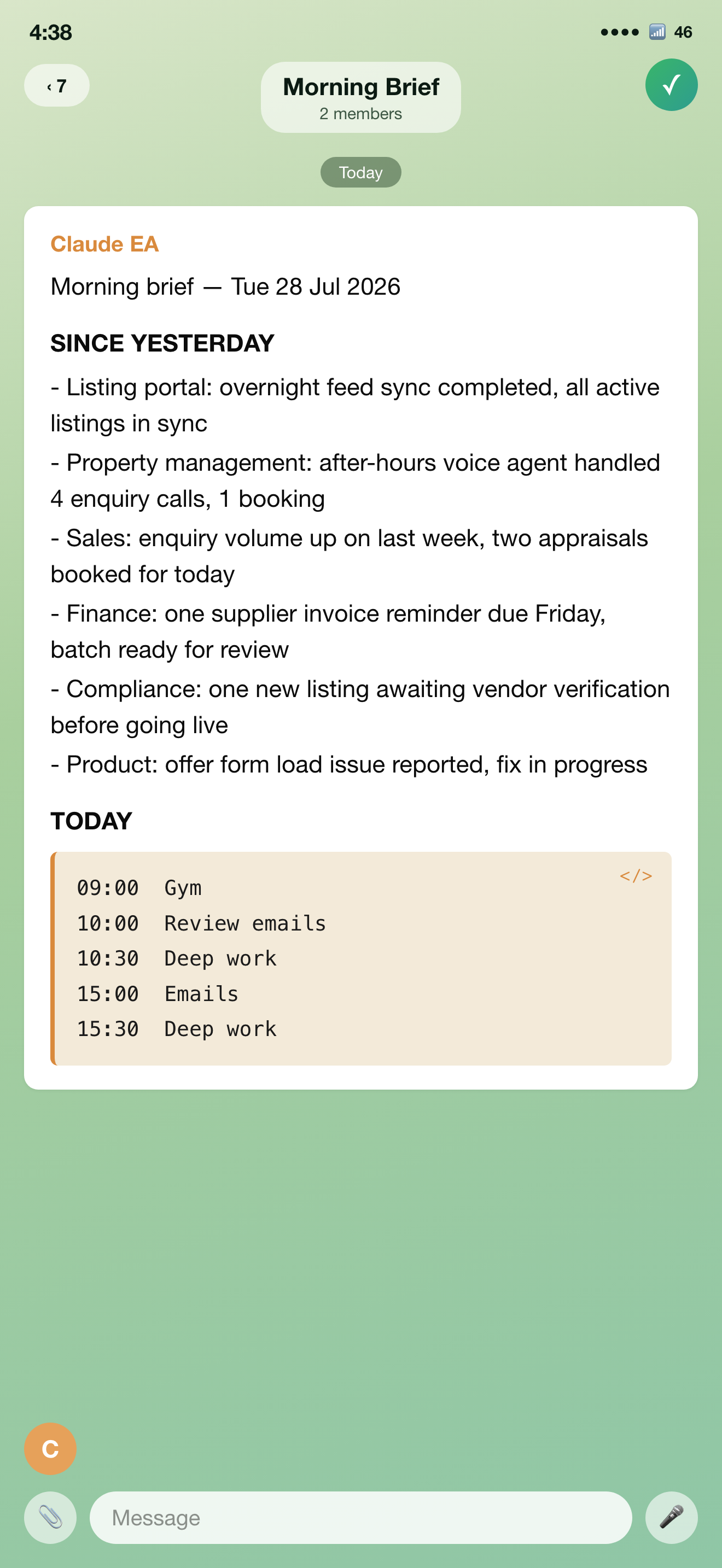
This is the work an EA would do. The EA is now AI.
The easiest place to prove the value, because the rules are already written down.
Invoices read from email and filed in Xero and MYOB. Bank transactions matched and coded overnight.
Reconciliations, commissions and payroll prepared for a person to approve. A report tells me what needs me.
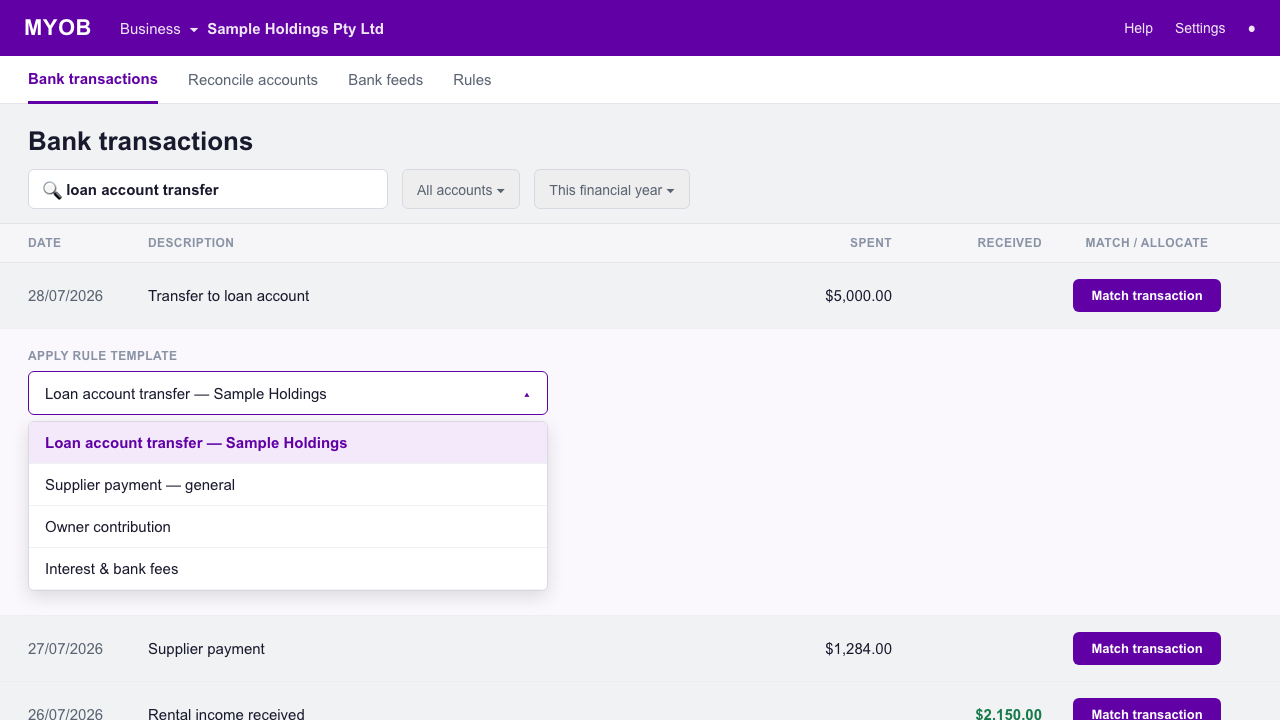
A person still approves every payment. AI prepares. People decide.
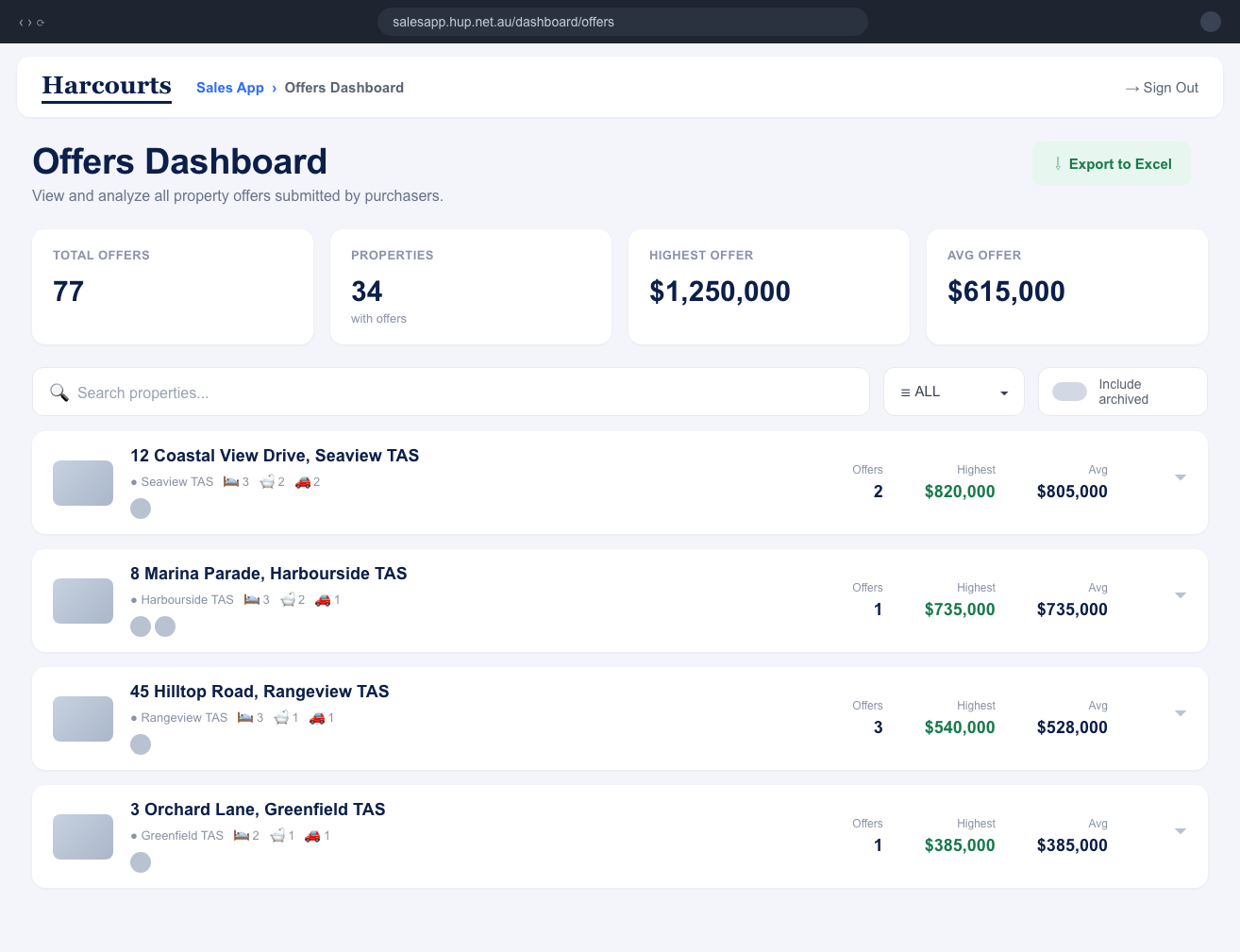
For us it is offers and agency agreements. For you, quotes, job sheets, applications, contracts. Structure it once and it runs itself.
A link texted to the buyer. Every detail captured once, compiled into one dashboard, reported without re-keying.
The agreement as a step-by-step flow. The same standard every time, whoever runs it.
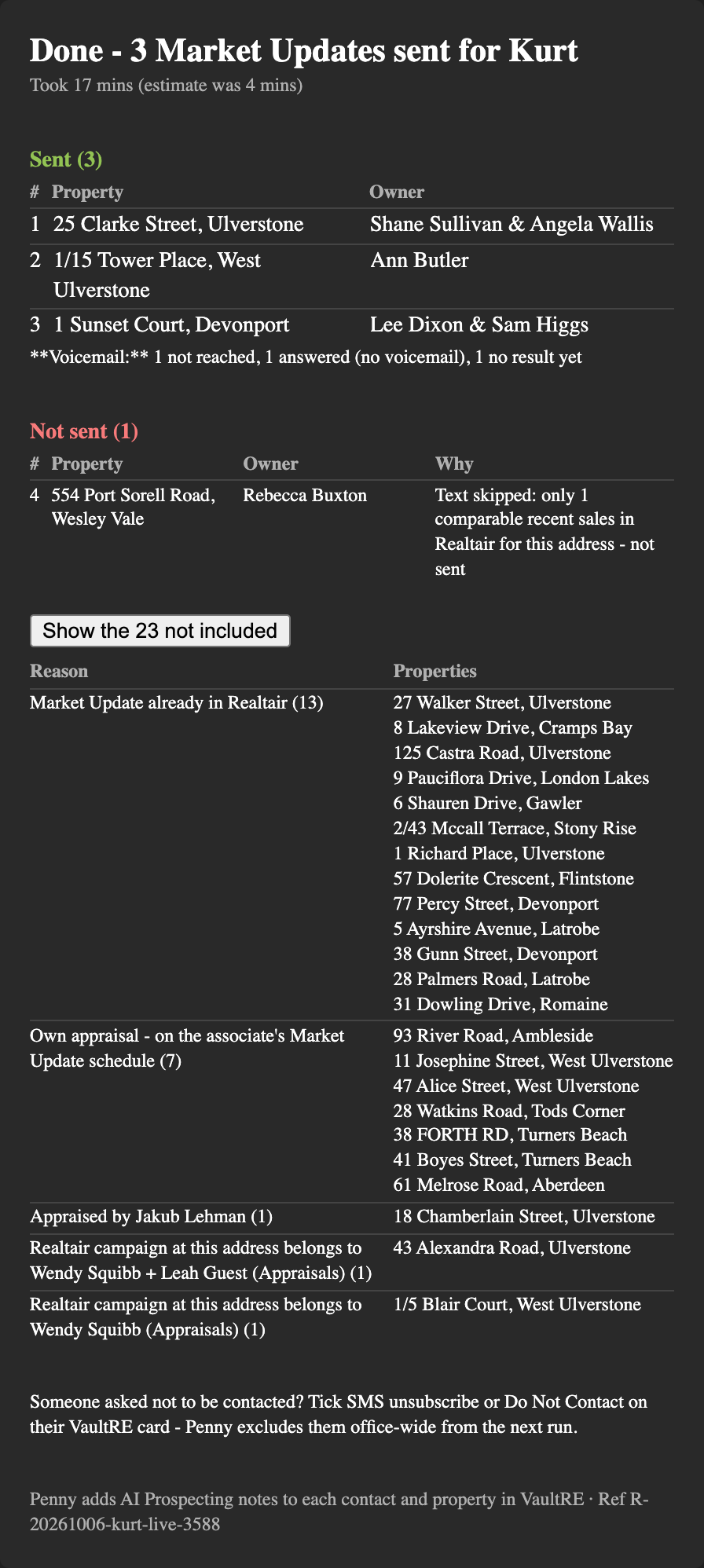
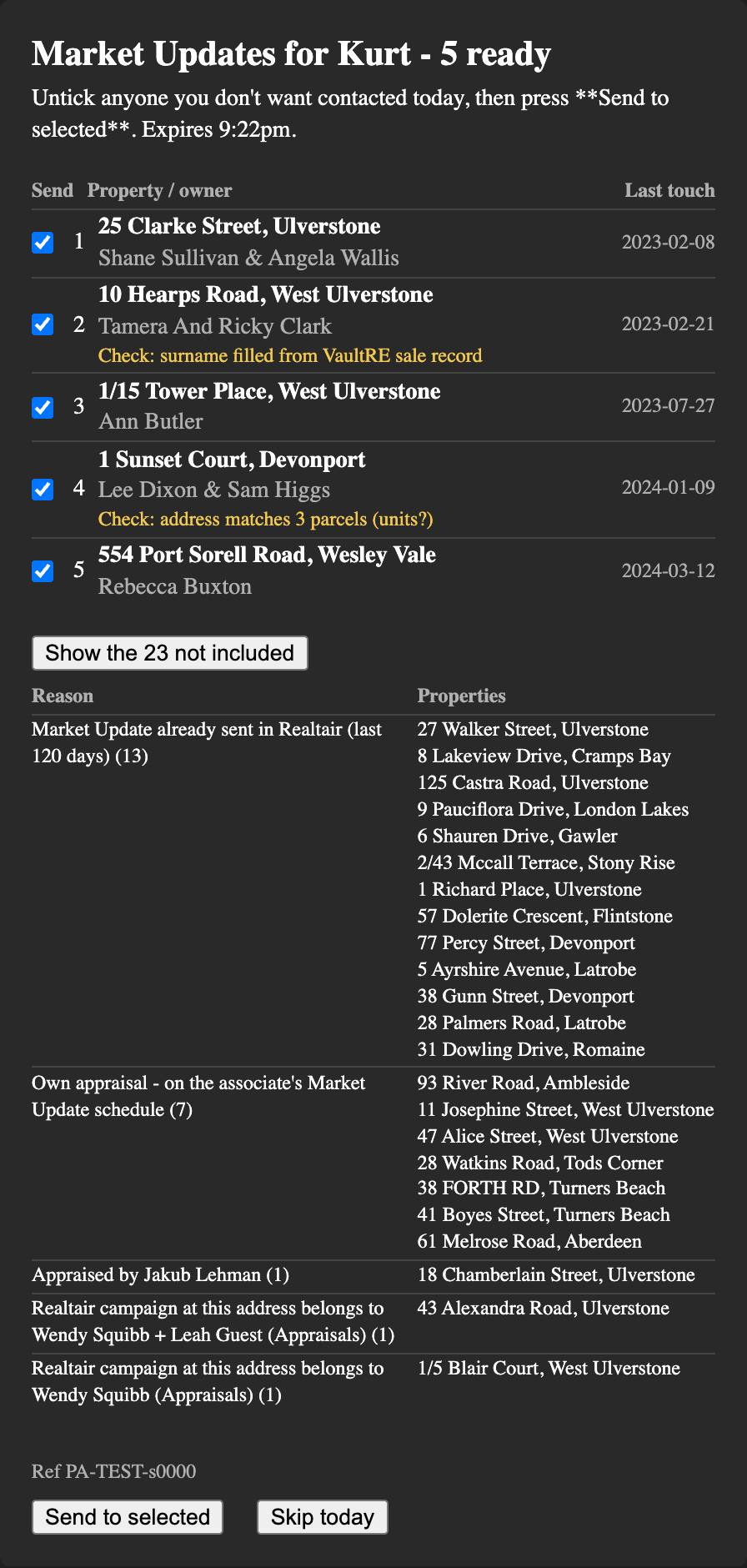
Every business has a database full of people it has not spoken to in years. Penny Prospector works through ours, coldest first, every morning.
The agent's coldest contacts, checked and filtered. How many today?
Thirty seconds. That is the whole human job.
Market update by text, the agent's voicemail dropped, a note on every CRM record, a report back.

| Document the process first. | AI amplifies a clear process and a messy one alike. |
|---|---|
| Data access is the real bottleneck. | Check what your systems let you connect to before you pick a project. |
| Silent failure is the biggest risk. | An automation that stops quietly is worse than none. Make every system report in. |
| Keep a human approval step. | AI prepares, a person approves. Money, people and customers especially. |
| Build capability, not just tools. | Grow the people alongside the software. |
Every AI employee starts as a job description.
Find the one job worth handing over first, and write its job description. Open the lined pages in your workbook.
Something you or your team do the same way, again and again.
Could you explain it to a new hire on their first day?
It costs you real time, or real money, every time it is done.
Many tasks will qualify. Prioritise by resource load, and group tasks that share steps. The best first candidate is high volume, rule based, and its data already sits in a system.
List the recurring jobs in your business. Score each column one to five, hours capped at five. Add them up. Circle your top three.
| Recurring task | Who does it | Hrs / week | Rules based 1 to 5 | Data in a system 1 to 5 | Score |
|---|---|---|---|---|---|
| Answering after-hours enquiries | Office admin | 6 | 4 | 5 | 14 |
| Coding the bank feed | Bookkeeper | 4 | 5 | 5 | 14 |
| Chasing quotes that went quiet | Owner | 3 | 3 | 4 | 10 |
| Yours |
| Penny, storage enquiries | Your AI employee | |
|---|---|---|
| Job title | Storage enquiries and bookings agent | |
| The job, in one sentence | Answer every storage enquiry, quote the right unit and book the customer in. | |
| Inputs: what it needs to know | Unit sizes, availability, prices, facility rules, access hours. | |
| Tools: what it can touch | Phone line, website chat, booking system. | |
| Hand-off: when a human steps in | Complaints, unusual requests, anything it is not sure about. | |
| Manager: who checks its work | Storage manager reviews bookings and conversations. | |
| Measure: how you know it is working | Enquiries answered, bookings made, after-hours coverage. |
Finish the task audit with your team. Agree the one task to start with.
Document that process step by step, including the exceptions.
Build or trial an AI version alongside the person doing it now.
Compare results. Keep, fix or drop. Pick the next task.
Start with one boring job you already understand. Every AI worker needs a manager: a human check, and a way to know when it has stopped.
A working day for owners who want AI doing the work. Bring your task audit and job description. Leave with the first version running.
Register your interest before you leave the room and the seat is $550. It commits you to nothing.